

.png)
.webp)


.webp)


.webp)


.webp)
Over the years, digital finance transformation has focused heavily on Accounts Payable (AP) automation.
Faster invoice processing, touchless approvals, streamlined vendor payments have all become standard priorities for CFOs and finance leaders. That’s fair.
But; this myopic focus creates a structural blind spot in many finance tech stacks. While companies optimize how money leaves the business, they often neglect the systems that control how money comes in.
That’s where Accounts Receivable (AR) becomes mission-critical.
Why AP Efficiency Depends on AR Predictability
AP efficiency is meaningless without strong AR performance. Without predictable inflows of cash, even the most automated AP function can’t sustain healthy working capital.
This is why forward-thinking finance leaders are complementing their AP stack with AI-native AR automation platforms like Growfin. To bring greater intelligence, control, and predictability to the other side of the cash flow equation.
The Cash Flow Equation CFOs Can’t Ignore
Every enterprise finance team ultimately manages a single equation. It’s basic math on paper. But; easier said than done:
Cash In – Cash Out = Business Resilience
AP systems optimize cash outflows:
- Vendor invoice processing
- Approval workflows
- Payment scheduling
- Spend visibility
AR systems determine cash inflows:
- Invoice collections
- Payment predictability
- Cash application
- Customer payment behavior
If receivables lag behind payables, the results are inevitable:
- Cash flow gaps
- Increased borrowing
- Higher working capital pressure
- Slower financial decision-making
This is why the Order-to-Cash (O2C) cycle has become one of the most strategic working capital optimization and growth levers for modern CFOs.
Why AP Systems Depend on Strong AR
AP automation improves payment efficiency. AR automation improves cash availability.
But; here’s the clincher:
You can’t optimize payments if you don’t know when cash will arrive.
Without reliable AR intelligence:
- CFOs struggle to plan payment cycles
- Treasury teams hold excess cash buffers
- Finance leaders delay investments or expansion
In other words: AR predictability enables AP optimization.
When AR automation platforms provide accurate payment predictions and real-time cash visibility, finance teams can confidently:
- Schedule vendor payments
- Capture early payment discounts
- Avoid short-term borrowing
- Improve working capital efficiency
The Hidden Cost of Underinvesting in Accounts Receivable
AR inefficiencies accumulate gradually as the business scales.
What begins as a manageable process with a few hundred invoices often becomes far more complex with growth: siloed systems of record, thousands of invoices, multiple billing systems, varied customer payment behaviors, and several payment channels.
The result is a growing set of operational inefficiencies that quietly impact DSO, collection cycles, cash flow predictability, working capital availability, and future growth investment avenues.
But; let’s take a closer look at the four most common symptoms this may take the shape of:
1. Manual Collections Chaos
In many organizations, collections workflows remain heavily manual. Even when invoice volumes grow dramatically. The cost of such manual inefficiencies compound over time.
Collectors typically rely on a fragmented set of tools:
- ERP aging reports that require manual-filtering
- Personal spreadsheets to track portfolio customer account follow-ups
- Email threads spread across individual (often overflowing) inboxes
- Static reminder schedules that completely ignore unique customer payment behavior and credit terms
As the number of accounts increases, these processes become harder to manage and prioritize. Instead of actively driving collections outcomes, AR teams spend a large portion of their day simply figuring out who to contact next and where each account stands.
This leads to several operational issues:
- Missed Follow-Ups: Without a centralized collections workflow, overdue invoices can slip through the cracks; especially across high-volume customer portfolios
- Reactive Collections: Collectors often engage only after invoices are significantly overdue, rather than proactively preventing payment delays
- Inconsistent and Non-Personalized Customer Communication: Different collectors may follow different outreach styles or escalation paths, creating a fragmented experience for customers
2. Cash Application Bottlenecks
Cash application is one of the most time-intensive and operationally-fragile components of AR. Payments rarely arrive in neat, structured formats.
Finance teams must reconcile transactions coming from multiple sources, including:
- Bank transfers and wires
- Lockbox deposits
- Online payment gateways
- Customer remittance emails
- Consolidated payments covering multiple invoices
In manual environments, AR teams work double-time to:
- Extract remittance data from emails, spreadsheets, and PDF documents
- Identify which invoices the payment corresponds to
- Split payments across multiple invoices
- Investigate discrepancies between invoice amounts and payment totals
Even small inconsistencies - such as missing remittance details or partial payments - can trigger time-consuming investigations.
These bottlenecks create ripple effects across the finance organization:
- Cash positions remain unclear until reconciliation is complete
- Month-end close takes longer
- Finance leaders lack real-time visibility into collected revenue
3. Limited Cash Flow Forecasting Visibility
For many CFOs, one of the biggest frustrations with AR is the lack of reliable cash flow forecasting. Sounds familiar?
Traditional forecasting methods rely heavily on:
- Static aging reports
- Historical averages
- Manual collector estimates
These approaches fail to capture the behavioral realities of customer payments.
For instance:
- Some customers consistently pay several days late
- Others only pay after receiving multiple reminders
- Certain industries have seasonal payment patterns
- Large enterprise invoices often depend on internal approval workflows
Without visibility into these patterns, finance leaders often find themselves relying on educated guesses rather than predictive insight when estimating cash inflows.
This uncertainty affects several critical financial decisions:
- Liquidity Planning Becomes Riskier: Treasury teams often maintain larger-than-necessary cash reserves because they cannot confidently predict when receivables will convert to cash
- Vendor Relationships Take a Hit: If expected cash inflows are delayed, vendor payments may need to be rescheduled, potentially impacting supplier trust and negotiation leverage
- Strategic Spending Becomes Harder to Time: Large payments - such as vendor contracts, capital investments, or expansion initiatives - become difficult to schedule without reliable incoming cash projections
4. AR and Sales Team Misalignment
Collections challenges are often symptoms of broader customer relationship dynamics. Late payments frequently stem from issues such as:
- Billing discrepancies
- Contract misunderstandings
- Procurement approval delays
- Unresolved disputes
- Customer satisfaction concerns
Yet in many enterprises, AR systems operate separately from CRM platforms and customer communication tools.
This disconnect creates significant operational friction such as:
- Disputes Take Longer to Resolve: AR teams may not have visibility into the underlying commercial relationship, forcing them to chase information across departments
- Sales Teams Remain Unaware of Payment Risks: Account managers may not realize that a key customer has multiple overdue invoices until the situation escalates
- Customer Communication Becomes Fragmented: Customers receive separate outreach from Finance, Sales, and Support teams with limited or negligible internal collaboration
This lack of alignment can damage customer relationships and prolong payment cycles.
How AI-Native AR Automation Transforms Cash Flow
Modern AR platforms are moving beyond simple automation toward AI-driven decisioning. Consolidated, trained datasets and real-time intelligence are foundational to the entire collections and reconciliation process.
Here are some of the core capabilities that truly AI-native Accounts Receivable (AR) automation bring to the working capital optimization table:
1. Seamless Integration With ERP and AP Portals
Modern finance stacks are built on integrated ecosystems.
AR platforms must connect with:
- ERP systems
- billing platforms
- payment gateways
- AP portals used by customers
For example, Growfin integrates with ERP systems and centralizes AR data from multiple sources to streamline order-to-cash workflows and improve financial visibility.
This is especially important because large enterprise customers often require invoices to be submitted through their Accounts Payable portals.
AR platforms that integrate with these portals can:
- Track invoice status inside customer AP systems
- Prevent missed submissions
- Speed up payment approvals
2. AI-Powered Collections Prioritization
Not all overdue invoices are equal.
AI-driven AR systems analyze multiple data signals to identify:
- Customers likely to delay payments
- Accounts requiring escalation
- Optimal timing for follow-ups
For example, Growfin’s platform uses behavioral insights and multiple data factors to predict payment timelines and prioritize accounts automatically.
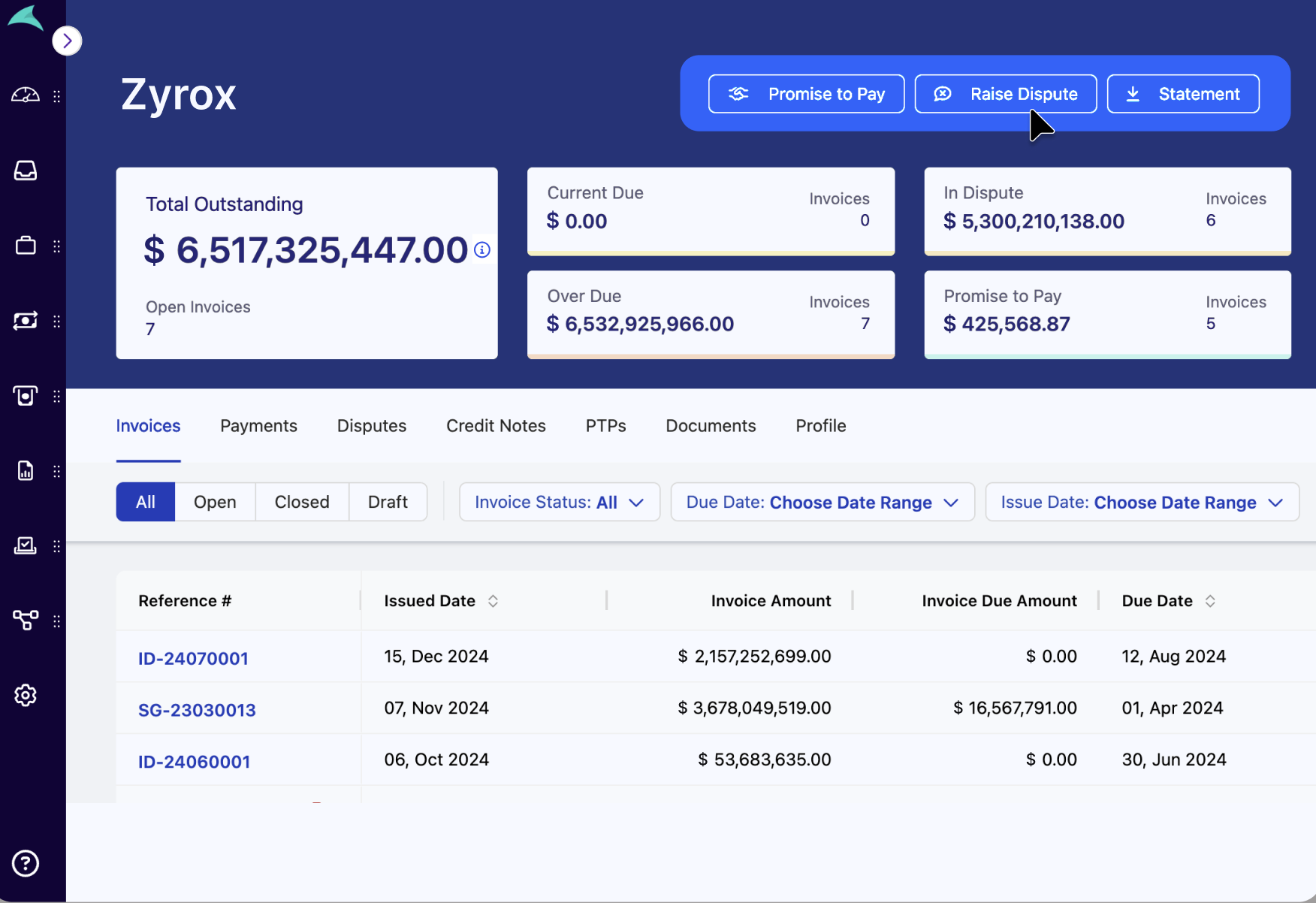
This allows AR teams to focus on high-impact accounts instead of chasing every invoice manually.
3. Agentic AI for Adaptive Collections
AI is evolving from automation to agentic decision-making.
Modern AR systems now adapt collections strategies based on customer behavior, enabling personalized follow-ups and proactive engagement.
Instead of static dunning rules, AI continuously learns from:
- Payment history
- Communication responses
- Dispute patterns
This dramatically improves on-time payment rates.
4. Intelligent Cash Application
Cash application remains one of the most time-consuming AR processes.
AI-powered platforms automate:
- Remittance extraction from emails and documents
- Matching payments to invoices
- Handling partial or bulk payments
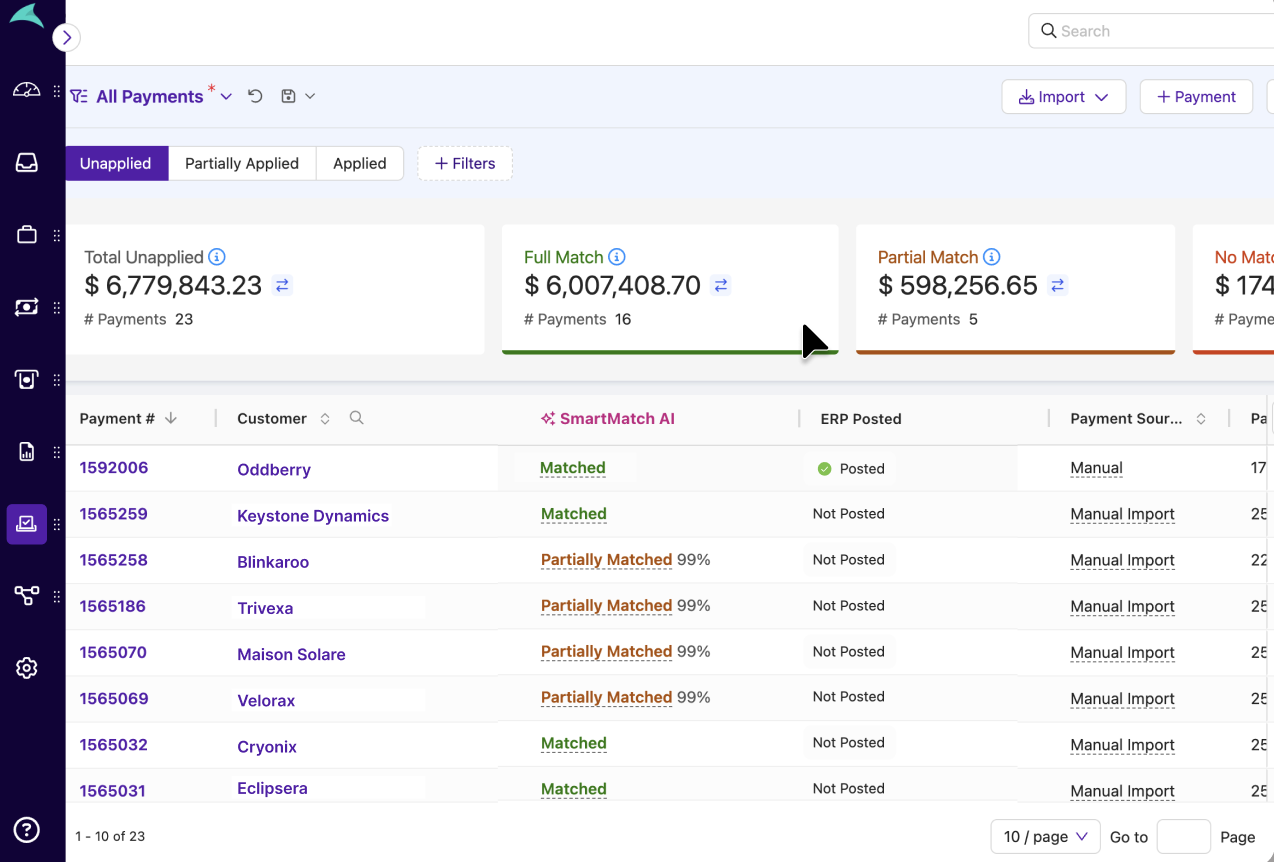
By automating reconciliation, finance teams can dramatically reduce manual workload and accelerate month-end close cycles.
5. Integrated AR Collaboration Across Finance and Sales
Collections don’t happen in isolation. Successful AR requires coordination across:
- Finance teams
- Sales reps
- Customer success managers
Platforms like Growfin act as a finance CRM, centralizing customer payment conversations, disputes, and escalations.
This ensures that everyone responsible for the customer relationship has visibility into payment status.
You Can’t Optimize Cash Out Without Optimizing Cash In
Finance transformation often starts with AP automation. But; it cannot end there. The most resilient finance organizations no longer treat AP and AR as separate silos. Especially in light of the new CFO mandate.
Platforms like Growfin become the AR intelligence layer in this ecosystem; bringing visibility and predictability to cash inflows.

.webp)
.webp)
.webp)

.webp)
.webp)