

.png)
.webp)


.webp)


.webp)


The moment you stop believing the demo
It usually happens after purchase, not before.
Week three of implementation, someone asks a question that no demo can answer cleanly.
Are we live yet?
Treasury wants tighter short-term visibility because the quarter is noisy. The Controller wants fewer late-stage surprises because close is already stretched. Sales wants collections to stop “getting in the way.” The AR team is stuck in a different conversation entirely: which customer identifiers are actually reliable, which remittance formats show up in the wild, which disputes live in email, and which “simple workflows” break the moment you integrate with the ERP.
The demo did not lie. It just performed in a clean room.
But your production environment is not a clean room. And nowhere is that more obvious than in Accounts Receivable.
Your AR reality is a patchwork of partial signals: bank portals, inbox threads, PDFs, CRM fields, ERP snapshots, and the spreadsheets people swear they will retire after go-live.
That is why implementation is where AR automation succeeds or quietly dies.
The Messy Middle Tax (the part nobody factors in)
Most AR automation programs do not fail because the tool is bad. They fail because the buyer underestimates the distance between demo and steady state.
Call that distance the Messy Middle Tax.
It is the hidden cost of making automation real in your environment. You pay it in rework, internal skepticism, stalled adoption, and the slow return of shadow processes.
This tax shows up in three predictable failure modes.
1) The Clean Data Illusion
Demos run on curated data. Your receivables contain the scars: old migrations, manual workarounds, inconsistent customer fields, and the kind of exceptions that only exist because a real customer paid in a real way on a real Friday at 6:07 p.m.
And it is not just ERP data quality. It is remittance reality.
Customers send what they send. PDFs, Excel, portal screenshots, short pays with no notes, deductions referenced in a completely different document. If your automation cannot ingest what customers actually transmit, your team will rebuild truth manually. Usually in a spreadsheet. AGAIN.
Implementation only works when you define your minimum viable truth before you configure anything.
- Which identifiers are authoritative enough to match a payment to an account?
- Which remittance sources must be captured so unapplied cash does not become a permanent queue?
- Which exception categories will remain manual by design, with clear ownership?
If you do not decide these up front, the system will decide for you. It will decide by pushing your team back into inbox archaeology and spreadsheet reconstruction.
2) The Integration Maze
AR automation doesn’t fail inside AR. It fails at the handoffs between systems.
The demo worked in isolation. Your real environment needs ERP, CRM, email, bank files, lockbox feeds, customer portals, and the informal workflows people use to get answers. Some of that will have APIs. Some of it will not.
This is where finance leaders mis-scope the work. They assume integration is a one-time IT task. In AR, integration is the operating surface.
If your integration plan is “sync invoices and payments,” you are building reporting. If your integration plan is “capture signals that change what we do next,” you are building control.
That distinction becomes your ROI.
3) The “Set It and Forget It” Lie
No enterprise system runs itself. AR will not stabilize if your reality keeps moving.
Rules change. Data changes. Customers change. People churn. Exceptions evolve. Your automation program needs maintenance, tuning, and governance as a permanent operating rhythm.
If your vendor’s plan ends at go-live, they are not implementing. They are installing.
The realistic implementation map (and what “good” looks like)
AR implementations fail when teams treat go-live as the finish line. In AR, go-live is the first audit.
A realistic map looks like this:
- Phase 1: Quick Wins (Weeks 1 to 4)
- Phase 2: Core Workflows (Months 2 to 3)
- Phase 3: Advanced Exceptions (Months 4 to 6)
- Ongoing: Maintenance and Evolution
This sequencing matters because AR is not one workflow. It is a living exception factory.
Phase 1: Quick Wins (Weeks 1 to 4)
The goal is not full automation. The goal is momentum.
Pick use cases that are high volume, low ambiguity, and politically safe. The ones that reduce daily friction without reopening policy debates.
Examples:
- Standard follow-up sequencing for undisputed invoices
- Auto-triage of inbound customer responses into “payment notice” vs “dispute” vs “needs info”
- Basic prioritization that stops collectors from working the wrong items first
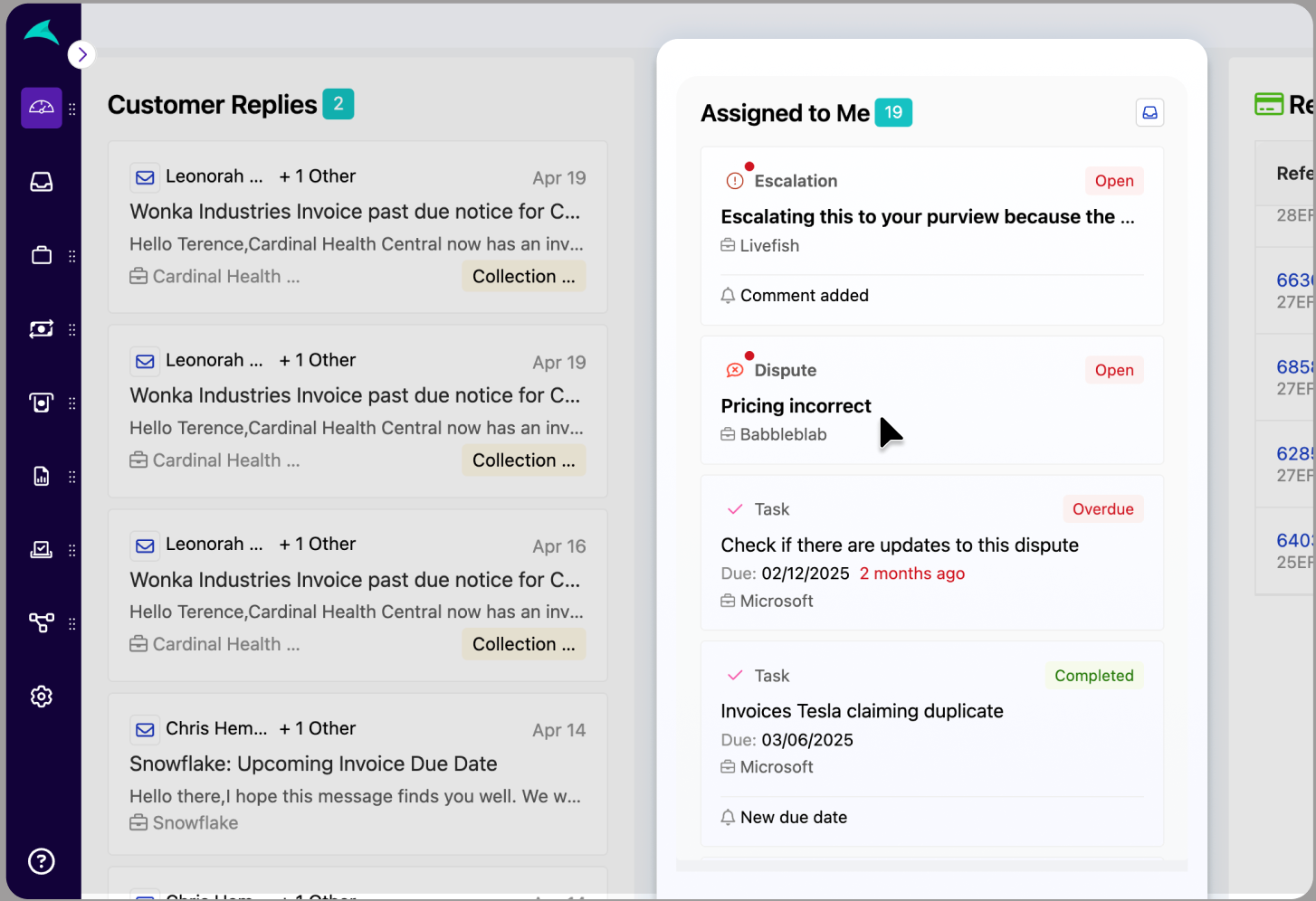
This phase exists to earn adoption fast. Teams adopt what makes their day lighter in the first month, not what promises transformation in month six.
Phase 2: Core Workflows (Months 2 to 3)
This is where you integrate where AR actually lives.
The work is not just “connect ERP.” It is establishing dependable handoffs and reliable state changes across systems.
- Invoice and customer status that reflects reality
- Dispute status that is visible and owned
- CRM context that informs escalation paths
- Email and documentation that stays attached to the record, not buried in threads
If this phase is weak, your team will keep running the business in parallel systems. That is how the Messy Middle Tax becomes permanent.
Phase 3: Advanced Exceptions (Months 4 to 6)
This is where you earn the real value, and where most teams get stuck if they rushed earlier phases.
Advanced exceptions are where AR volatility lives.
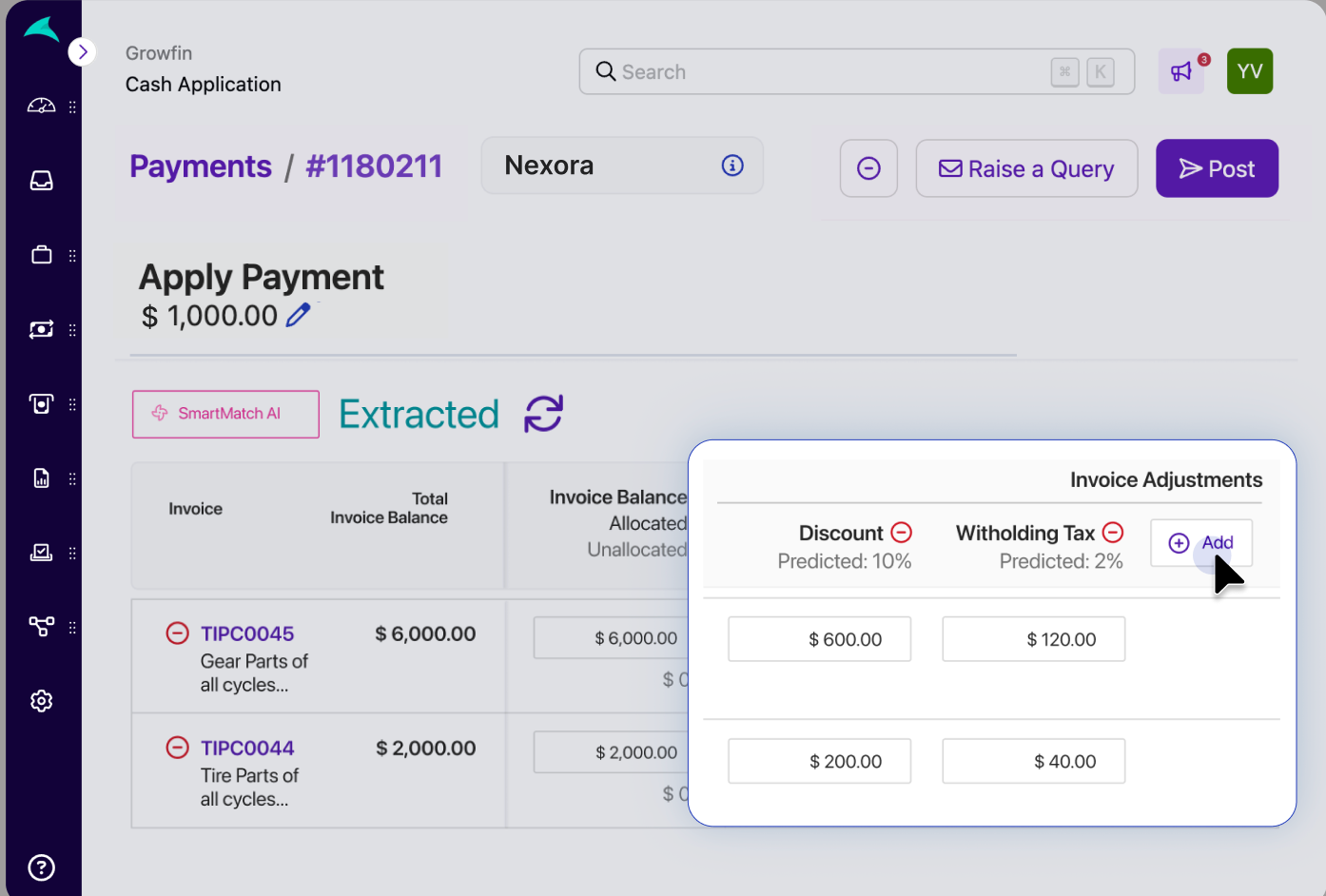
- Deductions and short pays that require categorization and routing
- Partial payments that need split logic and follow-up
- Disputes that need ownership, evidence, and timelines
- Write-offs that require governance and auditability
This is also where “learning” claims need guardrails.
The right expectation is not “everything works perfectly immediately.” The right expectation is controlled improvement over time, with clear human checkpoints for high-risk actions.
Ongoing: Maintenance and Evolution
AR automation is a system you operate, not a tool you install.
Expect:
- Rule tuning as customer behavior changes
- Ongoing data hygiene improvements
- Workflow refinements as ownership becomes clearer
- Continuous training for new team members
- Periodic review of exception categories and escalation paths
A mature program does not chase perfection. It engineers reliability.
What actually makes implementation succeed
Most teams think the deciding factor is tool sophistication. It is not.
What makes implementation succeed is implementation support.
The difference between “we went live” and “we trust the system” is almost always the vendor’s ability to carry you through the Messy Middle Tax without pretending it does not exist.
Here is what that support looks like in the real world.
- Honest timeline estimates that acknowledge integration and data reality
- Realistic success metrics for each phase so you know what “good” looks like in Weeks 1 to 4 versus Months 4 to 6
- Transparency about effort required from finance, IT, and cross-functional teams
Clear expectations align everyone on what is changing, when, and why.
Phased Approach
Implementation succeeds when the rollout follows how AR actually behaves.
- Start small, prove value, expand
- Quick wins maintain momentum
- Learn before complexity
A phased approach is not cautious. It is strategic.
It prevents the two most common failure outcomes: launching too broad and stalling, or forcing complexity too early and losing trust.
Strong Support
Implementation succeeds when the support team is not generic.
- An implementation team that understands your business reality and can translate it into workflows, ownership, and governance
- Responsive technical support that can solve integration blockers quickly
- A community of practitioners so your team is not inventing best practices in isolation
The gap between “configured” and “adopted” is usually a support gap, not a feature gap.
A Realistic Learning Curve
Implementation succeeds when nobody pretends the system will be perfect on day one.
- Not everything works perfectly immediately
- Expect an adjustment period
- Improvement over time, not instant perfection
The most credible implementations share timelines that sound real. That honesty builds confidence.
“Took us 2 months to build.”
That kind of statement is refreshing because it respects the complexity finance teams already know is there.
It also sets the right internal expectation: the goal is not instant automation. The goal is a controlled ramp to a system your team can trust.
Implementation Is the Product. Everything Else Is Theater.
Do not buy AR automation. Buy an implementation path you can govern.
The demo shows you what the tool can do in a clean room. Implementation shows you what your organization can run under pressure.
If you want to see what an implementation path designed for real AR conditions looks like, check out Growfin


.webp)
.webp)

.webp)
.webp)